Cannes 2011: My Reviews
 It's true that the Cannes Film Festival is like a club of filmmakers who always present their latest works there, with recurring names in every selection. This edition is no different: Lars von Trier returns in Melancholia after the controversial Antichrist, Terrance Malick finally presents his much-awaited Tree of Life, Pedro Almodovar reunites after 20 years with Antonio Banderas in The Skin I Live in, the Dardennes Brothers present their fifth consecutive feature in Cannes while Nuri Bilge Ceylan is screening his forth. It's also an edition of surprises (Melancholia is not so controversial) and anti-surprises (the direction of the festival lashes out at von Trier and bans him from the festival after his anti Jewish/Israeli joke-gone-wrong during the press conference of Melancholia). I found the calling of LVT persona non grata is much more shocking than his stupid talk. But I'm sure if he trashed Iran or Syria, he would have been applauded. Oh well, politics.
As to the themes of the selection, many have been shared by various films. Sequestration of youth (pedophilia in Michael, kidnapping in The Skin I Live in, children protection from crimes in Polisse, using a child for the sake of art in My Little Princess), the addressing of refugees (Polisse, Le Havre), questioning of Life and Death (Tree of Life, Hanezu and to a certain extend Melancholia and Once Upon a Time in Anatolia). But what has been striking is that children are at the core of plenty of films this edition, playing major roles (a boy looking for his father in Kid with a Bike, a girl used and abused by her artsy mother in My Little Princess, a young African refugee trying to make it to London in Le Havre, a boy locked in a basement in Michael).
But enough with the random talk. Here are my comments and rating on the 21 films that I saw in Cannes this year.
Caution: LOTS of spoilers ahead!
1. Michael
By Markus Schleinzer
Austria
Official Selection: Official Competition
B-

SYNOPSIS
MICHAEL describes the last five months of 10-year-old Wolfgang and 35-year-old Michael’s involuntary life together.
→ Interesting to say the least. I did not see this film coming. And I had no idea what to expect really. A pedophile who locks a 10-year-old boy in a basement while leading a completely normal life. But will his secret be revealed?
I thought it was a fine film, if not surprising one, especially since it’s a first film. The shots were long and repeated to show the routine life, but it’s nicely mastered and I liked the build-up. The story is relevant with all what is happening lately in terms of stories in Europe so it was very timely. The ending left me cold, but I take it it was not the director’s intention anyway.
2. Arirang
By Kim Ki-duk
South Korea
Official Selection: Un Certain Regard
B-
WINNER: PRIX Un Certain Regard (Ex-æquo)

SYNOPSIS
Arirang is
about Kim Ki-duk
playing 3 roles in 1.
Through Arirang I climb over one hill in life.
Through Arirang I understand human beings, thank the nature, and accept my life as it is now.
→ I want to hate this because it could be detestable. I used to love some of Kim’s works. But what the hell was that. Shooting himself on camera and having literally a meltdown on everything and bashing himself, his assistants, cinema and life in general and then sobbing over a sequence taken from one of his films while claiming he makes art and he is a top filmmaker and so on. And it runs for one hour and forty minutes? I almost lost it. And still, he brings up interesting questioning on life matters that I felt it was honest, if not gripping. He questions everything and kind of makes sense. But then again, this honest talk if not random (and almost unedited) talk, you’d rather hear at home or sitting in a bar. Not in front of the screen.
3. L’Homme au Velo (The Kid with a Bike)
By Jean-Pierre and Luc Dardenne
Belgium
Official Selection: Official Competition
C+
WINNER: GRAND PRIX (Ex-æquo)

SYNOPSIS
Cyril, almost 12, has only one plan: to find the father who left him temporarily in a children's home.
By chance he meets Samantha, who runs a hairdressing salon and agrees to let him stay with her at weekends.
Cyril doesn't recognize the love Samantha feels for him, a love he desperately needs to calm his rage.
→ As any Dardenne brothers film, the script was brilliantly put together, as are most of the scripts by the Dardenne brothers. Every action is well studied and justified. And the young guy who plays Cyril does a flawless job. However, I did not feel anything. The emotions were there, but they were not conveyed to me even if I tried to reach out to them. Many things I found recycled (were they trying to remake L'Enfant in another story?). It’s much more enjoyable than the last one, Lorna’s Silence, but I miss the early days of the Dardenne Brothers.
4. Et maintenant on va ou? (Where Do We Go Now)
Official Selection: Un Certain Regard
By Nadine Labaki
Lebanon
C+

SYNOPSIS
On the edge of a cratered road, a cortège-like procession of women solemnly makes its way towards the village cemetery. Takla, Amale, Yvonne, Afaf and Saydeh stoically brave the oppressive midday heat, clutching photographic effigies of their beloved menfolk, lost to a futile, protracted and distant war. Some of the women are veiled, others bear wooden crosses, but all are clad in black and united by a sense of shared grief. As they arrive at the cemetery gates, the procession divides into two congregations; one Muslim, the other Christian.
Set against the backdrop of a war-torn country, "Where do we go now ?" tells the heart-warming tale of a group of women’s determination to protect their isolated, mine-encircled, community from the pervasive and divisive outside forces that threaten to destroy it from within.
United by a common cause, the women’s unwavering friendship transcends, against all the odds, the religious fault lines which crisscross their society and they hatch some extraordinarily inventive, and oftentimes comical, plans in order to distract the village’s menfolk and defuse any sign of inter-religious tension.
→ After her acclaimed Caramel a while ago, Nadine Labaki had so much pressure as to what the follow-up to such a success story would be. Where Do We Go Now is surely much more mature than Labaki’s debut pic. But it has its flaws, particularly in the script that needs more writing and the religious Christian-Muslim treatment. And yet the filmmaker masters the direction and shoots a beautiful film. Acting wise, most of the characters are consistent, except for Labaki herself who plays, just like in Caramel, the leading role. And while she’s beautiful, she does a better job than in Caramel, but it still is subpar to the rest, especially since they all have a villagers’ accent while she does not, and it is clear in her big dramatic monologue. The whole lot of witty rhetorical and spontaneous sentences from the ladies in the village give the film an extra punch and a add to its humorous touch, and it is in a way, a segue to Caramel in the style Labaki is following. But still, I felt the film was finished hastily and made on time just to be presented in Cannes. It could have been on a much higher level had the filmmaker taken the proper time to finish it.
5. Be Omid E Didar (Goodbye)
By Mohammad Rasoulof
Iran
Official Selection: Un Certain Regard
C+
WINNER: DIRECTING PRIZE of Un Certain Regard, 2011
 SYNOPSIS
A family tries everything to leave Iran
→ The film builds up nicely although to be fair, I had no idea what the director wanted from me, or what he wanted me to understand throughout the film. It wasn’t until way after the middle that some explanations were brought to the thick plot. And for this, I couldn’t feel sympathy towards the character. The mood is very nice though, very icy-like. But still, I expected more, and got so less.
6. The Artist
by Michel Hazanavicius
France
Official Selection: Official Competition
B
WINNER: BEST ACTOR (Jean Dujardin)

SYNOPSIS
Hollywood 1927. George Valentin is a silent movie superstar. The advent of the talkies will sound the death knell for his career and see him fall into oblivion. For young extra Peppy Miller, it seems the sky's the limit - major movie stardom awaits.
→ What a little gem. A dash of brightness in the festival’s gloomy selection. You would feel that the film is full of clichés, made seven hundred times, tells you nothing you haven’t seen before, but fuck it works! And it works beautifully. And it brings a smile on your face to be watching a silent film from 2011 and not Eisenstein’s 1925 Battleship Potemkin. Jean Dujardin OWNS the film. He is excellent in his role and the main actress has so much grace and is beautiful throughout. And the dog steals the show. All in all, really liked it.
7. The Tree of Life
by Terrence Malick
USA
Official Selection: Official Competition
C+
WINNER: PALME D'OR

The Tree of Life is the impressionistic story of a Midwestern family in the 1950's. The film follows the life journey of the eldest son, Jack, through the innocence of childhood to his disillusioned adult years as he tries to reconcile a complicated relationship with his father. Jack finds himself a lost soul in the modern world, seeking answers to the origins and meaning of life while questioning the existence of faith.
→ The film is achingly beautiful. In its poetry, in its philosophy, in its studying of life and death, family ties, aging… But it is just too fucking long. Sean Penn doesn’t belong there. I couldn’t understand what he was doing, just walking in the prologue and the epilogue. There is a lot of preaching which bothered me at some point. And the 20 minute + National Geographic shots dragged a bit too much. The music is all over the film. You can make it poetic without putting music on every single shot. That said, I loved the performances of Hunter McCracken as the young Jack and Jessica Chastain whom I don’t know very well, as the submissive yet loving mother. Brad Pitt does his job, nothing more, nothing less. And I like the fact that it is non-linear, very much free-flow and leaves way to interpretation.
8. My Little Princess
by Eva Ionesco
France
Critics’ Week: 50th Anniversary Special Screening
B-

SYNOPSIS
Hannah and Violetta are an odd couple: an elusive mother and a little girl in search of maternal love, a fanciful artist and her reluctant model. When Hannah asks Violetta if she would like to be her model, her life with her loving grandmother is turned upside down. From a normal childhood to muse of the trendy Paris art scene…
→ That was surprising to say the least. I went without even knowing what the film was about. But I love the fact that Huppert is doing so much work with new filmmakers as opposed to sticking to established ones. This is such a cohesive work and the gem is the little girl who plays Violetta with such affirmation and conviction. The film builds up gradually, crescendo after the other and tension throughout that accompanies the awakening of the girl with what her mother is making her do. Sometimes it’s a bit over the top, but it’s still a thrilling film.
9. Le Havre
By Aki Kaurismaki
Finland
Official Selection: Official Competition
B
 SYNOPSIS
Marcel Marx, a former author and a well-known Bohemian, has retreated into a voluntary exile in the port city of Le Havre, where he feels he has reached a closer rapport with the people serving them in the occupation of the honourable, but not too profitable, of a shoe-shiner. He has buried his dreams of a literary breakthrough and lives happily within the triangle of his favourite bar, his work, and his wife Arletty, when fate suddenly throws in his path an underage immigrant refugee from the darkest Africa.
As Arletty at the same time gets seriously ill and is bedridden, Marcel once more has to rise against the cold wall of human indifference with his only weapon of innate optimism and the unwavering solidarity of the people of his quartier, but against him stands the whole blind machinery of the Western constitutionally governed state, this time represented by the dragnet of the police, moment by moment drawing closer around the refugee boy.
It's time for Marcel to polish his shoes and reveal his teeth.
→ Finally, a solid film. But then again, it’s Aki Kaurismaki, the man who made the delightful The Man without a Past. This one follows the same path. It’s in French, shot in the region of Le Havre, hence the title, with mostly French actors, but the great thing is that the film is not French at all, and it feels 100% Kaurismaki. It’s well put together, nicely paced, the actors do their roles with a punch, and on top of that, it’s still hilarious. I loved it.
10. Melancholia
by Lars Von Trier
Denmark
Official Selection: Official Competition
B
WINNER: BEST ACTRESS (Kirsten Dunst)
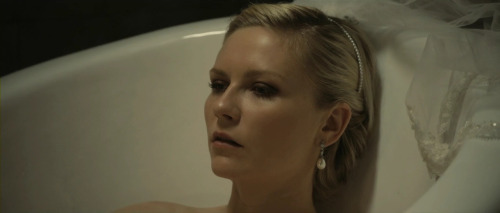
SYNOPSIS
Justine and Michael are celebrating their marriage at a sumptuous party in the home of her sister and brother-in-law. Meanwhile, the planet, Melancholia, is heading towards Earth...
→ Where shall I start. I thought the story was so so, maybe Melancholia – the planet – is just a pretext so that Von Trier can shoot whatever he had in mind. And this is the negative aspect of the film for me. Apart from that, it’s just a psychological and yet romantic (!) ride into the realm of two women, Kirsten Dunst, who is achingly beautiful as the bride, and who has matured so much in this film, and Charlotte Gainsbourg, flawless and who overshadows Dunst in the second half of the film. I thought she was even better than in Antichrist.
The film starts as what could be Von Trier going mainstream, while still being Lars Von Trier. But soon, the two-chapter movie becomes a psychological descent into the psyche of each of the actresses. The story looses itself within the complexity of the characters.
And just when you think that planet Melancholia is over, Von Trier brings it again and the film takes yet another direction.
It reminded me of Antichrist so much in various ways. First, Gainsbourg is there, and her Antichrist role is somehow reflected in Dunst’s role in Melancholia, and she even stated that herself. The film has chapters, just like Antichrist, the classical music is VERY prominent, and the slow-motion effect of the prologue is there in both films.
I did really enjoy it, especially the unveiling of how complex the characters were. The flow of the story is a bit disrupted because of that, the second part might be too long, but then again, I prefer to dive into the characters as opposed to dive into the story. The setting in which the story takes place is astounding. It might not be nessessairily my favorite Von Trier, but I think it’s still a well executed one, not as violent as Antichrist, but still enough to flip your mind.
11. Hanezu
by Naomi Kawase
Japan
Official Selection: Official Competition
B-

SYNOPSIS
The Asuka region is the birthplace of Japan. Here, in ancient times, there were those who fulfilled their lives in the midst of waiting. Modern people, apparently having lost this sense of waiting, seem unable to feel grateful for the present, and cling to the illusion that all things will move constantly forward according to one’s own plan.
In ancient times, there were three small mountains that people believed were inhabited by gods. They were Mt. Unebi, Mt. Miminashi, and Mt. Kagu, and they still stand. In that time, a powerful official used the mountains as a metaphor for a struggle inside his own heart. The mountains were an expression of human karma.
Time has passed into the present. Takumi and Kayoko, inheriting the unfulfilled hopes of their grandparents, live out their lives. Their tale continues a story of the ages, representing the uncountable souls that have accumulated in this land.
→ Let me state first how much I appreciate the cinema of Naomi Kawase. People could know her groundbreaking film Shara. But it’s her film The Morning Forest which has left a great impact on me a couple of years ago.
This one shares several similarities with Malick’s Tree of Life. Both evolve on life and death reflections. But whereas Malick has a clear establishment of the situations, even if dealt in non-linear style, here, it’s much more abstract. And the “national geographic” type of images from Earth and beyond used by Malick leave place to more intimate images of Earth used by Kawase, including drops of rain, birds giving food to their newborns… The film has so much compassion, has a great deal of depth, even if at times, it looses its oomph. But it still follows the path that Kawase has been excelling in: understand the human emotion.
12. 18 Days
by various Egyptian filmmakers
Egypt
Official Selection: Special Screening
C-
 SYNOPSIS
Interior/ Exterior The day following the infamous "Battle of the Camels" on Tahrir Square, Mona decides to join the demonstrators. Mustafa, her husband, tries to prevent her. Their marriage is about to break.
Curfew: During the curfew , Ali and his grandfather get lost on the streets of Suez on their way home.
Retention: The film revolves around a variety of Egyptian characters who are patients at a mental institution. We learn that some of them were forcefully confined to the hospital by security police forces. As the events of the revolution begin, the reactions of the different characters to the daily incidents and to each other’s opinions start being revealed.
The position of the hospital administration also plays a key symbolic role.
19/ 19: One of the leaders of the revolution gets arrested one day before the big day.
#Tahrir 2/2: This film tells two parallel stories about two people who come from very different backgrounds and how being on the square on February 2nd (Battle of the Camel) has changed their lives for ever.
Quand le Deluge Survient: How two marginalized from a poor social class try and succeed in making financial profit during the revolution from pictures and flags.
God’s Creation: How a girl who sells tea on the street joins the revolution, and how she finds in it a way out of her repressed life. It changes the way she thinks and feels about things, even how she feels about the color of her hair.
Ashraf Seberto: The film tells the story of a barber whose shop suddenly turns into a field hospital treating protesters.
Window: 'Window' tells the story of a young man, who lives in his bedroom, the changes he goes through and his reactions to the revolution he did not take part in, while watching the girl who lives next door through his only window. He barely leaves his room, and we barely leave it as well. Going through many personal details, ‘Window’ reviews the main events in the Egyptian Revolution through Newspapers
→ This is what I call doing things hastily to present them at the Cannes Film Festival. Various filmmakers made a collection of shorts to be presented in one long film about the Egyptian revolution that took place in January/February and that ousted Hosni Mubarak. The idea is of course excellent. It’s just that you can’t make it in such a rapid (and hence graceless) way. It needs time, preparation. It’s not about making a scoop to go to Cannes and present it, even if the festival made an even bigger mistake to select in its official selection to make a political statement rather than an artistic one.
Bottom line, few good things here, lot of bad things. So it’s very much uneven. That’s too bad.
13. Ichimei (Hara Kiri: Death of a Samurai)
by Takashi Miike
Japan
Official Selection: Official Competition
B

SYNOPSIS
Seeking a noble end, poverty-stricken samurai Hanshiro requests to commit ritual suicide at the House of Ii, run by headstrong Kageyu. Trying to dismiss Hanshiro's demand, Kageyu recounts the tragic story of a similar recent plea from young ronin Motome. Hanshiro is shocked by the horrifying details of Motome's fate, but remains true to his decision to die with honor. At the moment of the hara-kiri, Hanshiro makes a last request to be assisted by Kageyu’s samurai, who are coincidentally absent. Suspicious and outraged, Kageyu demands an explanation. Hanshiro confesses his bond to Motome, and tells the bittersweet tale of their lives... Kageyu will soon realize that Hanshiro has set in motion a tense showdown of vengeance against his house.
→ I thought this would be a full Samurai movie. Turns out I was wrong. And for the better. I am not a fan of Samurai films. But this had a kind of Samurai prologue and epilogue (the prologue being the harrowing hara-kiri scene) while the epilogue a fully-fledged Samurai fiesta of swords. The story is woven very intricately, and it took me by surprise. The only problem with the film is that somewhere in the middle, it becomes too melodramatic that it slows down its pace. It’s good though that there are some emotions in this part, because Japanese have a tendency to mask all kinds of emotions, especially in such tales. The 3D, is absolutely unnecessary. I just enjoyed it to watch the beautiful shot of the snow falling, but apart from that, I felt better without. All in all, a very nice and unexpected surprise.
14. La Piel que Habito (The Skin I Live in)
by Pedro Almodovar
Spain
Official Selection: Official Competition
B-
 © Lucía Faraig
SYNOPSIS
Ever since his wife was burned in a car crash, Dr. Robert Ledgard, an eminent plastic surgeon, has been interested in creating a new skin with which he could have saved her. After twelve years, he manages to cultivate a skin that is a real shield against every assault.
In addition to years of study and experimentation, Robert needed a further three things: no scruples, an accomplice and a human guinea pig. Scruples were never a problem. Marilia, the woman who looked after him from the day he was born, is his most faithful accomplice. And as for the human guinea pig...
→ Here you have a situation of extreme anticipation. I really like Almodovar’s core of work, but some things have been hit or miss lately. In his newest one, I felt like he is keeping on recycling those themes that distinguished him from other top filmmakers. I get the idea that he loves to play with the sexes and the complicated family issues and the mad characters. But it’s just that we’ve seen those a lot already. That said, the story is very complex, and it is treated in a pseudo-thriller way, which is innovative enough for Almodovar. But he didn't push it as far as he should have. I found Banderas extremely good, even if he still has Banderas under his skin, but it was refreshing to see him in a different light after several years of Hollywood stupidity. But the real threat was Elena Anaya who plays the leading role facing Banderas. She just haunts you with her beauty. Young newcomer Jan Cornet also gives a captivating performance. The sets and shots are extremely studied by Almodovar. Sometimes just a single shot make you instantly know it’s Almodovar behind the film. My main “technical” problem though is the music. It’s like the film has one big score that runs from the beginning until the end. Even if it shifts every now and then, from classical to house, it’s still everywhere, and it leaves no space for silence in the film.
15. The Day He Arrives
by HONG Sangsoo
South Korea
Official Selection: Un Certain Regard
B-
 SYNOPSIS
Sungjoon heads to Seoul to meet a close friend who lives in the Bukchon area. When the friend doesn’t answer his calls, Sungjoon wanders around Bukchon and runs into an actress he used to know. The two talk for a while, but soon part. He makes his way down to Insadong and drinks makgeolli (rice wine) by himself. Some film students at another table ask him to join them--Sungjoon used to be a film director. He soon gets drunk and heads for his ex-girlfriend’s house.
Whether it’s the next day or some other day, but Sungjoon is still wandering around Bukchon. He runs into the actress again. They talk and soon part. He eventually meets his friend and they head to a bar called Novel with a female professor his friend knows. The owner of the bar has a striking resemblance to Sungjoon’s ex-girlfriend. He plays the piano for her.
Whether it’s the next day or some other day, Sungjoon goes to the Jeongdok Public Library with his friend and mentions that it was the first place he chased after a woman. Later, they have drinks with a former actor who had been doing business in Vietnam. The same female professor joins them and the four go to the bar called Novel. Sungjoon gets drunk and ends up kissing the owner of the pub...
Sungjoon may have spent a few days in Seoul with his friend, or it may still be his first day there. He may have learned something from the encounter with his ex-girlfriend, or may have to meet the woman that resembles her again, for the first time. As life presents itself in no more than today’s worth of time, Sungjoon also has no other choice than to face his "today".
→ OK I just noticed that the synopsis is longer than the 79-minute film! I really like HONG Sangsoo. It’s true he made so many films, sometimes two per year, so he is prolific, but that can harm some works. He can use the same topics over and over and produce a film is little time so it can feel undercooked. That said, I enjoyed this one. I liked Ha Ha Ha (produced just last year and screened and awarded in Cannes) more, but this one is so witty and warmhearted. There are many characters and situations that feel either repeated or put together hastily, but this is the problem of making a film very fast.
16. Okhotnik (The Hunter)
by Bakur Bakuradze
Russia
Official Selection: Un Certain Regard
C
 SYNOPSIS
Farmer Ivan Dunaev gets up early. He feeds his piglets, does paperwork, fixes the tractor, and weighs the meat he'll take in his old pickup truck to the market to sell. He has a wife, a teenage daughter, and a young son. And he loves to hunt. His world revolves around these things. Then, one day, two new workers, Lyuba and Raya, on work release from the local prison colony, arrive on the farm. Ivan doesn't notice it at first, but something begins to change…
→ In this beautifully shot Russian dark tale, things have a tendency to be long. And stagnant. The synopsis says things begin to change, well they do. Only not as much as one wants them to. I know some things need to be repeated over and over to show continuity in the story but we after two hours of seeing the pigs, and slaughtering the pigs and feeding the pigs, I couldn’t see pigs anymore!
Still, it is beautifully shot. The characters could have been pushed more. But they talk a lot in their silence.
17. This Must Be the Place
by Paolo Sorrentino
Italy
Official Selection: Official Competition
C
 SYNOPSIS
Cheyenne is a former rock star.
At 50 he still dresses "Goth" and lives in Dublin off his royalties.
The death of his father, with whom he wasn't on speaking terms, brings him back to New York.
He discovers his father had an obsession: to seek revenge for a humiliation he had suffered.
Cheyenne decides to pick up where his father left off, and starts a journey, at his own pace, across America.
→ Ok, how many films will still be made about the Holocaust? Because clearly we’ve had our share now. The topic is harrowing and poignant and you name it, but it’s just too many films using it as a backdrop that it becomes tedious by now. This one’s no exception. I found the theme of the Holocaust just a pretext because it could have been anything, really.
Sean Penn stars as Cheyenne, and is really transformed here. Even he metamorphosed himself for the role, and comes as a very witty rock/pop star, he just falls flat by stagnating throughout the whole film with not a single change in the tone of the character.
As to the other characters, and as it’s a road movie, you don’t understand where some of these persons come from and why they are parachuted as such in the film. Why certain situations happen. The script feels undercooked. Not that it has to be flawless, but the flow of the story suffers from it. Like the old man whom Penn meets at the gas station. He drops him off in the middle of the desert and we don’t hear about him. Why? What’s the purpose?
The setting is beautiful, the shots are elegant, Sorrentino and Penn make a nice pair, but the film fails.
18. Drive
by Nicolas Winding Refn
USA
Official Selection: Official Competition
C+
WINNER: BEST DIRECTOR
 © Drive Film Holdings, LLC. All rights reserved
SYNOPSIS
DRIVE is the story of a Hollywood stunt driver by day, a loner by nature who moonlights as a top-notch getaway driver-for-hire in the criminal underworld. He finds himself a target for some of LA's most dangerous men after agreeing to aid the husband of his beautiful neighbor, Irene. When the job goes dangerously awry, the only way he can keep Irene and her son alive is to do what he does best-Drive.
→ This is one of those films that leave absolutely no impact on you. You enjoy them and that’s it. It’s a straightforward mafia action movie with car chasing, blood and mafia battles. Oh and some gratuitous violence too.
The story is nothing special, very much a déjà-vu. The special thing though here is Ryan Gosling who gives a great performance here. He has this special young aura that adds to his mysterious character. Carey Mulligan also does a fine job, and there is a nice chemistry in the couple on screen. The lighting is also beautiful in the film. Apart from that, well…
19. Elena
by Andrey Zvyagintsev
Russia
Official Selection: Closing Film Un Certain Regard
C+
WINNER: SPECIAL JURY PRIZE Un Certain Regard

SYNOPSIS
Elena and Vladimir are an older couple, they come from different backgrounds. Vladimir is a wealthy and cold man, Elena comes from a modest milieu and is a docile wife. They have met late in life and each one has children from previous marriages.
Elena’s son is unemployed, unable to support his own family and he is constantly asking Elena for money. Vladimir’s daughter is a careless young woman who has a distant relationship with her father.
A heart attack puts Vladimir in hospital, where he realizes that his remaining time is limited. A brief but somehow tender reunion with his daughter leads him to make an important decision: she will be the only heiress of his wealth. Back home he announces it to Elena. Her hopes to financially help her son suddenly vanish.
The shy and submissive housewife then comes up with a plan to give her son and grandchildren a real chance in life.
→ This is just the opposite of the other Russian film I saw yesterday. It has a story, a flow, a beginning and an end. With such a direct storyline, it doesn’t leave any space for a deviation, you just go straight with it. And maybe this is why I thought it was a bit easy with its treatment, there was no build up, no climax, it ran smooth until the end. The girl automatically reconciles with her father, she doesn’t have a full argument with her step-mother, the ending is too good to be true… The lead actress is very good and so is the directing. The film left me cold though.
20. Bir Zamanlar Anadolu’da (Once Upon a Time in Anatolia)
by Nuri Bilge Ceylan
Turkey
Official Selection: Official Competition
B+
WINNER: GRAND PRIX (Ex-æquo)
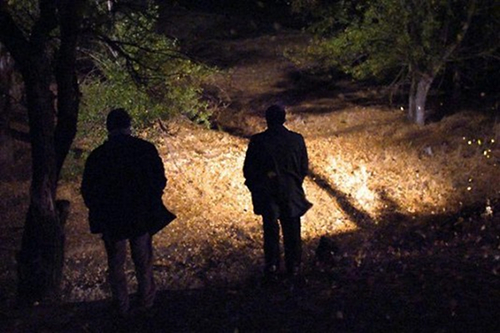 SYNOPSIS
Life in a small town is akin to journeying in the middle of the steppes: the sense that "something new and different" will spring up behind every hill, but always unerringly similar, tapering, vanishing or lingering monotonous roads...
→ My only B+ this festival. It’s a bit too long and it’s not your average film, it’s cinema at its best. Every shot is perfectly composed. The directing is flawless. Under the simple storyline lies a talk about life that runs in a very fluid way. Every “action” has a beginning and an end and still leaves space for reflection. This is the cinema of Nuri Bilge Ceylan which is still surprising me with every film he makes. Anatolia was no exception, it was even a revelation, not only by failing to disappoint, but by managing to go even higher than Climates and Three Monkeys.
The only film I nominate for the Palme d’Or this year.
21. Polisse
by Maiwenn
France
Official Selection: Official Competition
B
WINNER: JURY PRIZE

SYNOPSIS
The daily grind for the cops of the Police Department's Juvenile Protection Unit - taking in child molesters, busting underage pickpockets and chewing over relationship issues at lunch; interrogating abusive parents, taking statements from children, confronting the excesses of teen sexuality, enjoying solidarity with colleagues and laughing uncontrollably at the most unthinkable moments. Knowing the worst exists and living with it.
How do these cops balance their private lives and the reality they confront every working day?
Fred, the group's hypersensitive wild card, is going to have a hard time facing the scrutiny of Melissa, a photographer on a Ministry of the Interior assignment to document the unit.
→ I did very much enjoy it. The documentary feel in the fiction works, it reminded me of Laurent Cantet’s Entre les Murs. Some of the characters are very strong and the stories connect very well. Now there might be too much in a way but it’s still effective, and gives a broad idea of what happens in such a tough space.
Labels: Work
posted by roubish @ 11:51 AM
1 comments