cryptical

The Universe. Some scratches of Beryllium. Diving. The Navel of the Galaxies. Maybe god. Maybe the void. Maybe you. Maybe it's just cryptical

Thursday, June 02, 2011

Cannes 2011: My Reviews

It's true that the Cannes Film Festival is like a club of filmmakers who always present their latest works there, with recurring names in every selection. This edition is no different: Lars von Trier returns in Melancholia after the controversial Antichrist, Terrance Malick finally presents his much-awaited Tree of Life, Pedro Almodovar reunites after 20 years with Antonio Banderas in The Skin I Live in, the Dardennes Brothers present their fifth consecutive feature in Cannes while Nuri Bilge Ceylan is screening his forth. It's also an edition of surprises (Melancholia is not so controversial) and anti-surprises (the direction of the festival lashes out at von Trier and bans him from the festival after his anti Jewish/Israeli joke-gone-wrong during the press conference of Melancholia). I found the calling of LVT persona non grata is much more shocking than his stupid talk. But I'm sure if he trashed Iran or Syria, he would have been applauded. Oh well, politics.


As to the themes of the selection, many have been shared by various films. Sequestration of youth (pedophilia in Michael, kidnapping in The Skin I Live in, children protection from crimes in Polisse, using a child for the sake of art in My Little Princess), the addressing of refugees (Polisse, Le Havre), questioning of Life and Death (Tree of Life, Hanezu and to a certain extend Melancholia and Once Upon a Time in Anatolia). But what has been striking is that children are at the core of plenty of films this edition, playing major roles (a boy looking for his father in Kid with a Bike, a girl used and abused by her artsy mother in My Little Princess, a young African refugee trying to make it to London in Le Havre, a boy locked in a basement in Michael).

But enough with the random talk. Here are my comments and rating on the 21 films that I saw in Cannes this year.

Caution: LOTS of spoilers ahead!

1. Michael
By Markus Schleinzer

Austria

Official Selection: Official Competition
B-


SYNOPSIS
MICHAEL describes the last five months of 10-year-old Wolfgang and 35-year-old Michael’s involuntary life together.

→ Interesting to say the least. I did not see this film coming. And I had no idea what to expect really. A pedophile who locks a 10-year-old boy in a basement while leading a completely normal life. But will his secret be revealed?
I thought it was a fine film, if not surprising one, especially since it’s a first film. The shots were long and repeated to show the routine life, but it’s nicely mastered and I liked the build-up. The story is relevant with all what is happening lately in terms of stories in Europe so it was very timely. The ending left me cold, but I take it it was not the director’s intention anyway.

2. Arirang
By Kim Ki-duk
South Korea

Official Selection: Un Certain Regard

B-
WINNER: PRIX Un Certain Regard (Ex-æquo)


SYNOPSIS
Arirang is
about Kim Ki-duk
playing 3 roles in 1.
Through Arirang I climb over one hill in life.
Through Arirang I understand human beings, thank the nature, and accept my life as it is now.

→ I want to hate this because it could be detestable. I used to love some of Kim’s works. But what the hell was that. Shooting himself on camera and having literally a meltdown on everything and bashing himself, his assistants, cinema and life in general and then sobbing over a sequence taken from one of his films while claiming he makes art and he is a top filmmaker and so on. And it runs for one hour and forty minutes? I almost lost it. And still, he brings up interesting questioning on life matters that I felt it was honest, if not gripping. He questions everything and kind of makes sense. But then again, this honest talk if not random (and almost unedited) talk, you’d rather hear at home or sitting in a bar. Not in front of the screen.

3. L’Homme au Velo (The Kid with a Bike)
By Jean-Pierre and Luc Dardenne
Belgium

Official Selection: Official Competition

C+

WINNER: GRAND PRIX (Ex-æquo)


SYNOPSIS
Cyril, almost 12, has only one plan: to find the father who left him temporarily in a children's home.
By chance he meets Samantha, who runs a hairdressing salon and agrees to let him stay with her at weekends.
Cyril doesn't recognize the love Samantha feels for him, a love he desperately needs to calm his rage.

→ As any Dardenne brothers film, the script was brilliantly put together, as are most of the scripts by the Dardenne brothers. Every action is well studied and justified. And the young guy who plays Cyril does a flawless job. However, I did not feel anything. The emotions were there, but they were not conveyed to me even if I tried to reach out to them. Many things I found recycled (were they trying to remake L'Enfant in another story?). It’s much more enjoyable than the last one, Lorna’s Silence, but I miss the early days of the Dardenne Brothers.

4. Et maintenant on va ou? (Where Do We Go Now)
Official Selection: Un Certain Regard

By Nadine Labaki

Lebanon
C+

SYNOPSIS
On the edge of a cratered road, a cortège-like procession of women solemnly makes its way towards the village cemetery. Takla, Amale, Yvonne, Afaf and Saydeh stoically brave the oppressive midday heat, clutching photographic effigies of their beloved menfolk, lost to a futile, protracted and distant war. Some of the women are veiled, others bear wooden crosses, but all are clad in black and united by a sense of shared grief. As they arrive at the cemetery gates, the procession divides into two congregations; one Muslim, the other Christian.
Set against the backdrop of a war-torn country, "Where do we go now ?" tells the heart-warming tale of a group of women’s determination to protect their isolated, mine-encircled, community from the pervasive and divisive outside forces that threaten to destroy it from within.
United by a common cause, the women’s unwavering friendship transcends, against all the odds, the religious fault lines which crisscross their society and they hatch some extraordinarily inventive, and oftentimes comical, plans in order to distract the village’s menfolk and defuse any sign of inter-religious tension.

→ After her acclaimed Caramel a while ago, Nadine Labaki had so much pressure as to what the follow-up to such a success story would be. Where Do We Go Now is surely much more mature than Labaki’s debut pic. But it has its flaws, particularly in the script that needs more writing and the religious Christian-Muslim treatment. And yet the filmmaker masters the direction and shoots a beautiful film. Acting wise, most of the characters are consistent, except for Labaki herself who plays, just like in Caramel, the leading role. And while she’s beautiful, she does a better job than in Caramel, but it still is subpar to the rest, especially since they all have a villagers’ accent while she does not, and it is clear in her big dramatic monologue. The whole lot of witty rhetorical and spontaneous sentences from the ladies in the village give the film an extra punch and a add to its humorous touch, and it is in a way, a segue to Caramel in the style Labaki is following. But still, I felt the film was finished hastily and made on time just to be presented in Cannes. It could have been on a much higher level had the filmmaker taken the proper time to finish it.

5. Be Omid E Didar (Goodbye)

By Mohammad Rasoulof

Iran

Official Selection: Un Certain Regard

C+
WINNER: DIRECTING PRIZE of Un Certain Regard, 2011

SYNOPSIS
A family tries everything to leave Iran

→ The film builds up nicely although to be fair, I had no idea what the director wanted from me, or what he wanted me to understand throughout the film. It wasn’t until way after the middle that some explanations were brought to the thick plot. And for this, I couldn’t feel sympathy towards the character. The mood is very nice though, very icy-like. But still, I expected more, and got so less.

6. The Artist

by Michel Hazanavicius

France

Official Selection: Official Competition

B

WINNER: BEST ACTOR (Jean Dujardin)


SYNOPSIS
Hollywood 1927. George Valentin is a silent movie superstar. The advent of the talkies will sound the death knell for his career and see him fall into oblivion. For young extra Peppy Miller, it seems the sky's the limit - major movie stardom awaits.

→ What a little gem. A dash of brightness in the festival’s gloomy selection. You would feel that the film is full of clichés, made seven hundred times, tells you nothing you haven’t seen before, but fuck it works! And it works beautifully. And it brings a smile on your face to be watching a silent film from 2011 and not Eisenstein’s 1925 Battleship Potemkin. Jean Dujardin OWNS the film. He is excellent in his role and the main actress has so much grace and is beautiful throughout. And the dog steals the show. All in all, really liked it.

7. The Tree of Life
by Terrence Malick

USA
Official Selection: Official Competition

C+
WINNER: PALME D'OR


The Tree of Life is the impressionistic story of a Midwestern family in the 1950's. The film follows the life journey of the eldest son, Jack, through the innocence of childhood to his disillusioned adult years as he tries to reconcile a complicated relationship with his father. Jack finds himself a lost soul in the modern world, seeking answers to the origins and meaning of life while questioning the existence of faith.

→ The film is achingly beautiful. In its poetry, in its philosophy, in its studying of life and death, family ties, aging… But it is just too fucking long. Sean Penn doesn’t belong there. I couldn’t understand what he was doing, just walking in the prologue and the epilogue. There is a lot of preaching which bothered me at some point. And the 20 minute + National Geographic shots dragged a bit too much. The music is all over the film. You can make it poetic without putting music on every single shot. That said, I loved the performances of Hunter McCracken as the young Jack and Jessica Chastain whom I don’t know very well, as the submissive yet loving mother. Brad Pitt does his job, nothing more, nothing less. And I like the fact that it is non-linear, very much free-flow and leaves way to interpretation.

8. My Little Princess
by Eva Ionesco

France
Critics’ Week: 50th Anniversary Special Screening
B-

SYNOPSIS
Hannah and Violetta are an odd couple: an elusive mother and a little girl in search of maternal love, a fanciful artist and her reluctant model. 
When Hannah asks Violetta if she would like to be her model, her life with her loving grandmother is turned upside down. From a normal childhood to muse of the trendy Paris art scene…

→ That was surprising to say the least. I went without even knowing what the film was about. But I love the fact that Huppert is doing so much work with new filmmakers as opposed to sticking to established ones. This is such a cohesive work and the gem is the little girl who plays Violetta with such affirmation and conviction. The film builds up gradually, crescendo after the other and tension throughout that accompanies the awakening of the girl with what her mother is making her do. Sometimes it’s a bit over the top, but it’s still a thrilling film.

9. Le Havre
By Aki Kaurismaki
Finland

Official Selection: Official Competition

B

SYNOPSIS
Marcel Marx, a former author and a well-known Bohemian, has retreated into a voluntary exile in the port city of Le Havre, where he feels he has reached a closer rapport with the people serving them in the occupation of the honourable, but not too profitable, of a shoe-shiner. He has buried his dreams of a literary breakthrough and lives happily within the triangle of his favourite bar, his work, and his wife Arletty, when fate suddenly throws in his path an underage immigrant refugee from the darkest Africa.
As Arletty at the same time gets seriously ill and is bedridden, Marcel once more has to rise against the cold wall of human indifference with his only weapon of innate optimism and the unwavering solidarity of the people of his quartier, but against him stands the whole blind machinery of the Western constitutionally governed state, this time represented by the dragnet of the police, moment by moment drawing closer around the refugee boy.
It's time for Marcel to polish his shoes and reveal his teeth.

→ Finally, a solid film. But then again, it’s Aki Kaurismaki, the man who made the delightful The Man without a Past. This one follows the same path. It’s in French, shot in the region of Le Havre, hence the title, with mostly French actors, but the great thing is that the film is not French at all, and it feels 100% Kaurismaki. It’s well put together, nicely paced, the actors do their roles with a punch, and on top of that, it’s still hilarious. I loved it.

10. Melancholia
by Lars Von Trier
Denmark

Official Selection: Official Competition
B

WINNER: BEST ACTRESS (Kirsten Dunst)
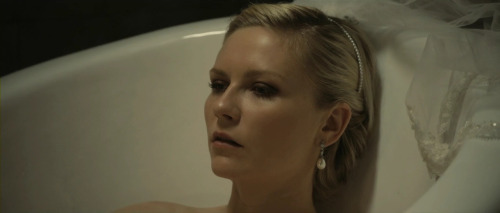

SYNOPSIS
Justine and Michael are celebrating their marriage at a sumptuous party in the home of her sister and brother-in-law. Meanwhile, the planet, Melancholia, is heading towards Earth...

→ Where shall I start. I thought the story was so so, maybe Melancholia – the planet – is just a pretext so that Von Trier can shoot whatever he had in mind. And this is the negative aspect of the film for me. Apart from that, it’s just a psychological and yet romantic (!) ride into the realm of two women, Kirsten Dunst, who is achingly beautiful as the bride, and who has matured so much in this film, and Charlotte Gainsbourg, flawless and who overshadows Dunst in the second half of the film. I thought she was even better than in Antichrist.
The film starts as what could be Von Trier going mainstream, while still being Lars Von Trier. But soon, the two-chapter movie becomes a psychological descent into the psyche of each of the actresses. The story looses itself within the complexity of the characters.
And just when you think that planet Melancholia is over, Von Trier brings it again and the film takes yet another direction.
It reminded me of Antichrist so much in various ways. First, Gainsbourg is there, and her Antichrist role is somehow reflected in Dunst’s role in Melancholia, and she even stated that herself. The film has chapters, just like Antichrist, the classical music is VERY prominent, and the slow-motion effect of the prologue is there in both films.
I did really enjoy it, especially the unveiling of how complex the characters were. The flow of the story is a bit disrupted because of that, the second part might be too long, but then again, I prefer to dive into the characters as opposed to dive into the story. The setting in which the story takes place is astounding. It might not be nessessairily my favorite Von Trier, but I think it’s still a well executed one, not as violent as Antichrist, but still enough to flip your mind.

11. Hanezu

by Naomi Kawase

Japan

Official Selection: Official Competition
B-


SYNOPSIS
The Asuka region is the birthplace of Japan. Here, in ancient times, there were those who fulfilled their lives in the midst of waiting. Modern people, apparently having lost this sense of waiting, seem unable to feel grateful for the present, and cling to the illusion that all things will move constantly forward according to one’s own plan.
In ancient times, there were three small mountains that people believed were inhabited by gods. They were Mt. Unebi, Mt. Miminashi, and Mt. Kagu, and they still stand. In that time, a powerful official used the mountains as a metaphor for a struggle inside his own heart. The mountains were an expression of human karma.
Time has passed into the present. Takumi and Kayoko, inheriting the unfulfilled hopes of their grandparents, live out their lives. Their tale continues a story of the ages, representing the uncountable souls that have accumulated in this land.

→ Let me state first how much I appreciate the cinema of Naomi Kawase. People could know her groundbreaking film Shara. But it’s her film The Morning Forest which has left a great impact on me a couple of years ago.
This one shares several similarities with Malick’s Tree of Life. Both evolve on life and death reflections. But whereas Malick has a clear establishment of the situations, even if dealt in non-linear style, here, it’s much more abstract. And the “national geographic” type of images from Earth and beyond used by Malick leave place to more intimate images of Earth used by Kawase, including drops of rain, birds giving food to their newborns… The film has so much compassion, has a great deal of depth, even if at times, it looses its oomph. But it still follows the path that Kawase has been excelling in: understand the human emotion.

12. 18 Days
by various Egyptian filmmakers
Egypt
Official Selection: Special Screening
C-

SYNOPSIS
Interior/ Exterior The day following the infamous "Battle of the Camels" on Tahrir Square, Mona decides to join the demonstrators. Mustafa, her husband, tries to prevent her. Their marriage is about to break.

Curfew: During the curfew , Ali and his grandfather get lost on the streets of Suez on their way home.

Retention: The film revolves around a variety of Egyptian characters who are patients at a mental institution. We learn that some of them were forcefully confined to the hospital by security police forces. As the events of the revolution begin, the reactions of the different characters to the daily incidents and to each other’s opinions start being revealed.
The position of the hospital administration also plays a key symbolic role.

19/ 19: One of the leaders of the revolution gets arrested one day before the big day.

#Tahrir 2/2: This film tells two parallel stories about two people who come from very different backgrounds and how being on the square on February 2nd (Battle of the Camel) has changed their lives for ever.

Quand le Deluge Survient: How two marginalized from a poor social class try and succeed in making financial profit during the revolution from pictures and flags.

God’s Creation: How a girl who sells tea on the street joins the revolution, and how she finds in it a way out of her repressed life. It changes the way she thinks and feels about things, even how she feels about the color of her hair.

Ashraf Seberto: The film tells the story of a barber whose shop suddenly turns into a field hospital treating protesters.

Window: 'Window' tells the story of a young man, who lives in his bedroom, the changes he goes through and his reactions to the revolution he did not take part in, while watching the girl who lives next door through his only window. He barely leaves his room, and we barely leave it as well. Going through many personal details, ‘Window’ reviews the main events in the Egyptian Revolution through Newspapers

→ This is what I call doing things hastily to present them at the Cannes Film Festival. Various filmmakers made a collection of shorts to be presented in one long film about the Egyptian revolution that took place in January/February and that ousted Hosni Mubarak. The idea is of course excellent. It’s just that you can’t make it in such a rapid (and hence graceless) way. It needs time, preparation. It’s not about making a scoop to go to Cannes and present it, even if the festival made an even bigger mistake to select in its official selection to make a political statement rather than an artistic one.
Bottom line, few good things here, lot of bad things. So it’s very much uneven. That’s too bad.

13. Ichimei (Hara Kiri: Death of a Samurai)
by Takashi Miike

Japan

Official Selection: Official Competition

B

SYNOPSIS
Seeking a noble end, poverty-stricken samurai Hanshiro requests to commit ritual suicide at the House of Ii, run by headstrong Kageyu. Trying to dismiss Hanshiro's demand, Kageyu recounts the tragic story of a similar recent plea from young ronin Motome. Hanshiro is shocked by the horrifying details of Motome's fate, but remains true to his decision to die with honor. At the moment of the hara-kiri, Hanshiro makes a last request to be assisted by Kageyu’s samurai, who are coincidentally absent. Suspicious and outraged, Kageyu demands an explanation. Hanshiro confesses his bond to Motome, and tells the bittersweet tale of their lives... Kageyu will soon realize that Hanshiro has set in motion a tense showdown of vengeance against his house.

→ I thought this would be a full Samurai movie. Turns out I was wrong. And for the better. I am not a fan of Samurai films. But this had a kind of Samurai prologue and epilogue (the prologue being the harrowing hara-kiri scene) while the epilogue a fully-fledged Samurai fiesta of swords. The story is woven very intricately, and it took me by surprise. The only problem with the film is that somewhere in the middle, it becomes too melodramatic that it slows down its pace. It’s good though that there are some emotions in this part, because Japanese have a tendency to mask all kinds of emotions, especially in such tales. The 3D, is absolutely unnecessary. I just enjoyed it to watch the beautiful shot of the snow falling, but apart from that, I felt better without. All in all, a very nice and unexpected surprise.

14. La Piel que Habito (The Skin I Live in)
by Pedro Almodovar

Spain

Official Selection: Official Competition

B-
© Lucía Faraig

SYNOPSIS
Ever since his wife was burned in a car crash, Dr. Robert Ledgard, an eminent plastic surgeon, has been interested in creating a new skin with which he could have saved her. After twelve years, he manages to cultivate a skin that is a real shield against every assault.
In addition to years of study and experimentation, Robert needed a further three things: no scruples, an accomplice and a human guinea pig. Scruples were never a problem. Marilia, the woman who looked after him from the day he was born, is his most faithful accomplice. And as for the human guinea pig...

→ Here you have a situation of extreme anticipation. I really like Almodovar’s core of work, but some things have been hit or miss lately. In his newest one, I felt like he is keeping on recycling those themes that distinguished him from other top filmmakers. I get the idea that he loves to play with the sexes and the complicated family issues and the mad characters. But it’s just that we’ve seen those a lot already. That said, the story is very complex, and it is treated in a pseudo-thriller way, which is innovative enough for Almodovar. But he didn't push it as far as he should have. I found Banderas extremely good, even if he still has Banderas under his skin, but it was refreshing to see him in a different light after several years of Hollywood stupidity. But the real threat was Elena Anaya who plays the leading role facing Banderas. She just haunts you with her beauty. Young newcomer Jan Cornet also gives a captivating performance. The sets and shots are extremely studied by Almodovar. Sometimes just a single shot make you instantly know it’s Almodovar behind the film. My main “technical” problem though is the music. It’s like the film has one big score that runs from the beginning until the end. Even if it shifts every now and then, from classical to house, it’s still everywhere, and it leaves no space for silence in the film.

15. The Day He Arrives
by HONG Sangsoo

South Korea

Official Selection: Un Certain Regard
B-
SYNOPSIS
Sungjoon heads to Seoul to meet a close friend who lives in the Bukchon area. When the friend doesn’t answer his calls, Sungjoon wanders around Bukchon and runs into an actress he used to know. The two talk for a while, but soon part. He makes his way down to Insadong and drinks makgeolli (rice wine) by himself. Some film students at another table ask him to join them--Sungjoon used to be a film director. He soon gets drunk and heads for his ex-girlfriend’s house.
Whether it’s the next day or some other day, but Sungjoon is still wandering around Bukchon. He runs into the actress again. They talk and soon part. He eventually meets his friend and they head to a bar called Novel with a female professor his friend knows. The owner of the bar has a striking resemblance to Sungjoon’s ex-girlfriend. He plays the piano for her.
Whether it’s the next day or some other day, Sungjoon goes to the Jeongdok Public Library with his friend and mentions that it was the first place he chased after a woman. Later, they have drinks with a former actor who had been doing business in Vietnam. The same female professor joins them and the four go to the bar called Novel. Sungjoon gets drunk and ends up kissing the owner of the pub...
Sungjoon may have spent a few days in Seoul with his friend, or it may still be his first day there. He may have learned something from the encounter with his ex-girlfriend, or may have to meet the woman that resembles her again, for the first time. As life presents itself in no more than today’s worth of time, Sungjoon also has no other choice than to face his "today".

→ OK I just noticed that the synopsis is longer than the 79-minute film! I really like HONG Sangsoo. It’s true he made so many films, sometimes two per year, so he is prolific, but that can harm some works. He can use the same topics over and over and produce a film is little time so it can feel undercooked. That said, I enjoyed this one. I liked Ha Ha Ha (produced just last year and screened and awarded in Cannes) more, but this one is so witty and warmhearted. There are many characters and situations that feel either repeated or put together hastily, but this is the problem of making a film very fast.

16. Okhotnik (The Hunter)
by Bakur Bakuradze
Russia
Official Selection: Un Certain Regard
C

SYNOPSIS
Farmer Ivan Dunaev gets up early. He feeds his piglets, does paperwork, fixes the tractor, and weighs the meat he'll take in his old pickup truck to the market to sell. He has a wife, a teenage daughter, and a young son. And he loves to hunt. His world revolves around these things. Then, one day, two new workers, Lyuba and Raya, on work release from the local prison colony, arrive on the farm. Ivan doesn't notice it at first, but something begins to change…

→ In this beautifully shot Russian dark tale, things have a tendency to be long. And stagnant. The synopsis says things begin to change, well they do. Only not as much as one wants them to. I know some things need to be repeated over and over to show continuity in the story but we after two hours of seeing the pigs, and slaughtering the pigs and feeding the pigs, I couldn’t see pigs anymore!
Still, it is beautifully shot. The characters could have been pushed more. But they talk a lot in their silence.

17. This Must Be the Place
by Paolo Sorrentino

Italy

Official Selection: Official Competition
C

SYNOPSIS
Cheyenne is a former rock star.
At 50 he still dresses "Goth" and lives in Dublin off his royalties.
The death of his father, with whom he wasn't on speaking terms, brings him back to New York.
He discovers his father had an obsession: to seek revenge for a humiliation he had suffered.
Cheyenne decides to pick up where his father left off, and starts a journey, at his own pace, across America.

→ Ok, how many films will still be made about the Holocaust? Because clearly we’ve had our share now. The topic is harrowing and poignant and you name it, but it’s just too many films using it as a backdrop that it becomes tedious by now. This one’s no exception. I found the theme of the Holocaust just a pretext because it could have been anything, really.
Sean Penn stars as Cheyenne, and is really transformed here. Even he metamorphosed himself for the role, and comes as a very witty rock/pop star, he just falls flat by stagnating throughout the whole film with not a single change in the tone of the character.
As to the other characters, and as it’s a road movie, you don’t understand where some of these persons come from and why they are parachuted as such in the film. Why certain situations happen. The script feels undercooked. Not that it has to be flawless, but the flow of the story suffers from it. Like the old man whom Penn meets at the gas station. He drops him off in the middle of the desert and we don’t hear about him. Why? What’s the purpose?
The setting is beautiful, the shots are elegant, Sorrentino and Penn make a nice pair, but the film fails.

18. Drive
by Nicolas Winding Refn
USA

Official Selection: Official Competition

C+

WINNER: BEST DIRECTOR

© Drive Film Holdings, LLC. All rights reserved

SYNOPSIS

DRIVE is the story of a Hollywood stunt driver by day, a loner by nature who moonlights as a top-notch getaway driver-for-hire in the criminal underworld. He finds himself a target for some of LA's most dangerous men after agreeing to aid the husband of his beautiful neighbor, Irene. When the job goes dangerously awry, the only way he can keep Irene and her son alive is to do what he does best-Drive.

→ This is one of those films that leave absolutely no impact on you. You enjoy them and that’s it. It’s a straightforward mafia action movie with car chasing, blood and mafia battles. Oh and some gratuitous violence too.
The story is nothing special, very much a déjà-vu. The special thing though here is Ryan Gosling who gives a great performance here. He has this special young aura that adds to his mysterious character. Carey Mulligan also does a fine job, and there is a nice chemistry in the couple on screen. The lighting is also beautiful in the film. Apart from that, well…

19. Elena
by Andrey Zvyagintsev
Russia

Official Selection: Closing Film Un Certain Regard
C+

WINNER: SPECIAL JURY PRIZE Un Certain Regard


SYNOPSIS
Elena and Vladimir are an older couple, they come from different backgrounds. Vladimir is a wealthy and cold man, Elena comes from a modest milieu and is a docile wife. They have met late in life and each one has children from previous marriages.
Elena’s son is unemployed, unable to support his own family and he is constantly asking Elena for money. Vladimir’s daughter is a careless young woman who has a distant relationship with her father.
A heart attack puts Vladimir in hospital, where he realizes that his remaining time is limited. A brief but somehow tender reunion with his daughter leads him to make an important decision: she will be the only heiress of his wealth. Back home he announces it to Elena. Her hopes to financially help her son suddenly vanish.
The shy and submissive housewife then comes up with a plan to give her son and grandchildren a real chance in life.

→ This is just the opposite of the other Russian film I saw yesterday. It has a story, a flow, a beginning and an end. With such a direct storyline, it doesn’t leave any space for a deviation, you just go straight with it. And maybe this is why I thought it was a bit easy with its treatment, there was no build up, no climax, it ran smooth until the end. The girl automatically reconciles with her father, she doesn’t have a full argument with her step-mother, the ending is too good to be true… The lead actress is very good and so is the directing. The film left me cold though.

20. Bir Zamanlar Anadolu’da (Once Upon a Time in Anatolia)
by Nuri Bilge Ceylan
Turkey
Official Selection: Official Competition
B+
WINNER: GRAND PRIX (Ex-æquo)
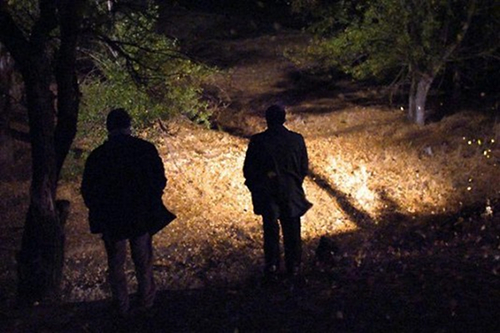
SYNOPSIS
Life in a small town is akin to journeying in the middle of the steppes: the sense that "something new and different" will spring up behind every hill, but always unerringly similar, tapering, vanishing or lingering monotonous roads...

→ My only B+ this festival. It’s a bit too long and it’s not your average film, it’s cinema at its best. Every shot is perfectly composed. The directing is flawless. Under the simple storyline lies a talk about life that runs in a very fluid way. Every “action” has a beginning and an end and still leaves space for reflection. This is the cinema of Nuri Bilge Ceylan which is still surprising me with every film he makes. Anatolia was no exception, it was even a revelation, not only by failing to disappoint, but by managing to go even higher than Climates and Three Monkeys.
The only film I nominate for the Palme d’Or this year.

21. Polisse
by Maiwenn
France
Official Selection: Official Competition
B
WINNER: JURY PRIZE


SYNOPSIS
The daily grind for the cops of the Police Department's Juvenile Protection Unit - taking in child molesters, busting underage pickpockets and chewing over relationship issues at lunch; interrogating abusive parents, taking statements from children, confronting the excesses of teen sexuality, enjoying solidarity with colleagues and laughing uncontrollably at the most unthinkable moments. Knowing the worst exists and living with it.
How do these cops balance their private lives and the reality they confront every working day?
Fred, the group's hypersensitive wild card, is going to have a hard time facing the scrutiny of Melissa, a photographer on a Ministry of the Interior assignment to document the unit.

→ I did very much enjoy it. The documentary feel in the fiction works, it reminded me of Laurent Cantet’s Entre les Murs. Some of the characters are very strong and the stories connect very well. Now there might be too much in a way but it’s still effective, and gives a broad idea of what happens in such a tough space.

Labels:

Sunday, May 31, 2009

Cannes 2009: The Reviews


Cannes 2009.
With the iconic Monica Vitti chosen to be the festivals' 62nd edition image, one could not but expect to have a grand cinematic threat.

I saw 36 films, including all 20 in the official selection.
Films that talk about sex, religion, cinema, horror but never about the crisis that is affecting the globe. Or maybe it's the festival's decision to keep that aside.

The competition could highlight the happenings of the 20th century, starting in 1914 with Michael Haneke's White Ribbon right before WWI, and merging into the 1920's with Marco Bellochio's Vincere, which resuscitates the secret wife of Mussolini. And from Mussolini to Hitler through the 1940 Inglorious Basterds in which Quentin Tarantino imagines another death of the Fuhrer. 1948, the creation of the State of Israel in Elia Suleiman's The Time That Remains which runs until the modern days. And because we've had it with wars, we'll take a break in the 1960's when the hippies are Taking Woodstock with Ang Lee in what would become the most important music festival of all times. But if you want to go way beyond that century, you can sink into the universe of poet John Keats in 1818 (Jane Campion's Bright Star).

That's on a historic level. But conceptually, it's a whole different story. Sex is at the core of the festival. It was indeed sex in all of its forms: violent (Lars Von Trier's Antichrist), morbid (Brillante Mendoza's Kinatay), homosexual (Lou Ye's Spring Fever), vampire-like (Park Chan-Wook's Thirst), polygamous (Andrea Arnold's Fish Tank) or simply abundant (what else could it be except Gaspard Noe's Enter the Void).

And with sex comes an excessive usage of violence. Blood appears in each of the films mentioned above, especially the first two, but also in Jacques Audiard's prison-inferno A Prophet, Johnnie To's says-it-all title Vengeance, and Isabel's Coixet's Map of the Sounds of Tokyo where blood looks more appealing than lipstick on a bathroom mirror.

But the best surprise is yet to come: the abundant usage of "film within a film" in this year's edition. Many filmmakers used this concept to come through with their new ideas, starting with Mateo Blanco recalling his late lover who played in his film (Pedro Almodovar's Broken Embraces), Shoshana Dreyfus planning a major coup during a Nazi screening in her own cinema (Quentin Tarantino's Inglorious Basterds), and Kang-Sheng Lee recreating the myth of Salome on film in the Louvre (Tsai Ming-Liang's Face).

And since not all men are in the movie business, there are simple ones leading their daily lives (or trying to, at least), like Georges Palet who's fancying the woman behind the purse he found next to his car in Alain Resnais' Wild Grass, Eric Bishop's chaotic mess of a life whose sole salvation is Manchester United (Ken Loach's Looking for Eric) and Paul (or Philippe, depending on the circumstances) a small-time crook who's just been released out of prison and went on to build a highway (Xavier Giannoli's In the Beginning).

With that said, here are the reviews of all 36 films I saw in Cannes this year, by category and in their chronological screening order, as well as my grades.
Country-speaking, I'd say this was the year for South Korea, Palestine and the Philippines, with a grand return to France:

The official selection:
Competition (films competing for the Palme d'Or)
Un Certain Regard
Out of Competition

The parallel sections of the festival:
The Directors' Fortnight
The Critics' Week

I - Official Selection: Competition (20 films seen - all films in competition)

Fish Tank

by Andrea Arnold
UK, 2009, 124 minutes
Grade: 4/5
Jury Prize Ex-aequo, 2009


Andrea Arnold. Sure she doesn't make much films, maybe one every three to four years. And I don't mind that. I loved her 2006 Red Road. I think many like me were surprised by that film, which snatched the Jury Prize in Cannes that year. So I was eagerly anticipating her newest one.

Fish Tank started off roughly, and I thought no, a teenage angst movie. But boy was I wrong.
The story is about 15-year-old Mia (Katie Jarvis) who's life is turned upside down when her mother brings a new boyfriend Connor (Michael Fassbender) to their messy home. The slow start quickly evolves into an intricate and complex story and the second part is revelatory. Parts of this remind the realism of Ken Loach, but other parts are simple Andrea Arnold.
I really like this one, if not to say more than simply like.

Katie Jarvis is a revelation, and Michael Fassbender who was previously spotted in the delightful and poignant Hunger (by Steve McQueen) is just a breath of fresh air in this tumultuous neighborhood.

I had the feeling Arnold would get an award from the beginning, as this was the first film showed in competition, and she went home for the second consecutive time, with the Jury Prize. Not bad eh?

Spring Fever (Original Title: Chun Feng Chen Zui De Ye Wan)
by Lou Ye
China, 2009, 115 minutes
Grade: 3/5
Award for Best Screenplay, 2009


This is an intricate gay story in the heart of China. The filmmaker has been banned to make films in China because in his previous work Summer Palace, he filmed in the Tienanmen Square several sensitive topics and the film was screened in Cannes without approval from the Chinese government.

As to his new film, it's overtly sexual with many explicit gay sex scenes which won't solve his issues with the government. He managed to shoot everything without being arrested. The story itself is based on a Chinese poem from the 1920's adapted to today's society. Several scenes drag and it is at times over dramatic (especially the wife which did not impress me at all). There are some nice things going on but sometimes it's meh. But it's still a beautiful tale in which all characters get fully involved.

I was surprised by the amount of people from the older generation who left the theater because they thought it was too gay and could not digest the gay sex scenes. I could hear them chat about that actually. Talk about intolerance, even in Cannes, the biggest FILM festival!
The Award for Best Script dazzled many. But oh well.

Brigt Star
by Jane Campion
New Zealand/UK, 2009, 120 minutes
Grade: 1/5


Ahahaha. NO. What the hell happened to the awesomeness of Campion? I have no idea. This is atrocious! I'm going to be flamed but I did not like this at all.

The secret love affair between English poet John Keats with fashion stylist in 1818.
It feels like this has been made so many times! Poetry and history and tragedy and class clashes that prevent marriages. My god. What the hell happened to Campion? The critics might like the beautiful work, because mind you, every shot is beautiful. But "beautiful" lighting, "beautiful" acting, "beautiful" image does not work here at all. It's plain BORING! I almost fell asleep.

And needless to say, the critics' drooled over this. Why? Again, I have no idea.
Bright Star is not bright at all. I give it barely One Star.

Thirst (Original Title: Bak Jwi)

by Park Chan-Wook
South Korea, 2009, 133 minutes
Grade: 4/5
Jury Prize Ex-aequo, 2009


Do you remember the film Old Boy (2003)? Here comes Park Chan-Wook's newest sensation.
I hate horror films, vampires, blood scenes. Yes I am a very sensitive guy. But I LOVED everything about this film.

Vampires are at the core of this love story and it looks nothing like Twilight. A priest who was thought to be miraculous was indeed hit by a mysterious sickness and he discovers that in order to stay alive, he must drink blood.

The final scene is utterly beautiful and the whole cinematography is brilliant.
There was a 20-minute plus standing ovation and the cast ended up being very emotional.
I knew this would be among the winners and I was so right!

A Prophet (Original Title: Un Prophète)

by Jacques Audiard
France, 2009, 150 minutes
Grade: 3.5/5
Grand Prix, 2009


Irony of sorts: after having seen Korea's priest the night before morphing into a vampire, I was to witness this gripping story with Muslim-heavy background in an Arab sector of a prison in France.

Malik El Djebena, a 19-year-old fragile new prisoner of Moroccan origins, has no acquaintances with other detained when he arrives to the Centrale. But in order to survive in this dog-eat-dog world and finish his 6-year sentence, he has to service the leader of a Corsican gang, while backing away from his Muslim "brothers." And that in order to gain the gang's leader confidence in order to gain some benefits. With that achieved, Malik would be intelligent enough to secretly accomplish what he has on his mind.

The film stars Tahar Rahim, an unknown actor who plays the role of Malik marvelously. And the film is well directed and keeps you hooked until the denouement. There is not a single weak moment in the whole saga.

What I thought was lacking are the actual themes. There's nothing new or exceptional here that we don't know in the worlds of French prisons. But I can forgive that because the delivery is made of win.

From the start, this has been a favorite for the prestigious Palme d'Or among the press and the critics.

Taking Woodstock
by Ang Lee
USA, 2009, 120 minutes
Grade: 2.5/5


A fine and fun ride back to the origins of Woodstock and the hippy days.
The small motel in upstate New York run by Elliot Tiber's parents is threatened to be closed by the bank. Elliot (played by Demetri Martin), a gay interior designer who hasn't assumed his sexual identity, returns to help his folks although he doesn't know how yet. When a festival is not given license in a nearby town, Elliot decides to take things in his own hands and gives the producer and call, for what would be the starting point of the Woodstock Festival.

It's nice that Ang Lee decided to change styles and instead of dramas, he opted for a comedy. But let's face it, this is nowhere near Brokeback Mountain nor Lust, Caution, Ang Lee's 2005 and 2007 renowned films that won plenty of awards at the Venice Film Festival and the Oscars, among others, save the on-growing international fame for Lee.
But although nice, this feel forgettable. This is not a step forward for the Taiwanese director, unfortunately.

Kinatay
by Brillante Mendoza
Philippines/France, 2009, 100 minutes
Grade: 3/5
Best Director Award


I'm unsure about this one. It has a very particular feel and at the same time, it's too horror-like for my taste. But one cannot but talk about the filmmaker, Brillante Mendoza, who's been constantly the target of critics'.

After his 2008 official competition entry Serbis which was trashed by the whole-Cannes, comes an even harsher feature which many could not handle. And while Von Trier's Antichrist is violent enough, it doesn't come anywhere close to what Kinatay is.

The film follows criminology student Peping for a full day a Manila, from his marriage during the day to his "descent to hell". In order to feed his wife Cecile and their child, he has to make some living, and for that he's ready to do whatever it takes, including helping a schoolmate and his gang get rid of a prostitute because she's late in paying her "fees".

Several have left the theater. And the reason, the butchering of a woman live on screen in a never ending scene. And though I found the mood terrific and the score accompanying the film overall intriguing, I thought Mendoza was searching for provocation. Most of the film has been shot in a bus at night (some could argue about the quality of shooting, I found it very well done), and add the chopping scene, he sure was not looking to gain new fans save keep his older ones puzzled over explicit sex, violence and a morbid story.

On a side note, Tarantino said it was his favorite film in Cannes.

Looking for Eric
by Ken Loach
United Kingdom/France/Italy/Belgium/Spain, 2009, 116 minutes
Grade: 4.5/5


Meet Eric. A postman. Or let's say a troubled postman for he's not envied for the life he has. Two stepsons of the wildest caliber. A wife that he still loves after he left her 30 years ago. A job that's becoming tiresome for a man who was full of life. To deal with this, Manchester United. Or to put it directly, Eric Cantona, who's emerging from his exhaustion to help him move on. And when Eric meets Eric...

Simply a gem. Or the gem I have been waiting for. I loved every second of it. At first, I was perplexed as to why football god Eric Cantona is there, it was forced and the story is so much better without him. But then it all unveiled as the film evolved. The film is funny, serious, simple and to put in cinema words, it's simply Ken Loach.

After his Palme d'Or for The Wind that Shakes the Barley (2006), his defensive It's a Free World (2007), Loach proves that he's a master in showcasing reality. And even if he takes the comic aspect of it in Looking for Eric, it doesn't mean it's less poignant.

Vengeance
by Johnnie To
Hong Kong, 2009, 108 minutes
Grade: 1.5/5


Hmm yeah. The straightforward story of a man coming to avenge the death of her daughter's family in Hong Kong. Casting French mega rock star Johnny Hallyday to play the role is just a sales boost. I felt he has nothing to do with the film nor the whole environment he was implanted in.

I don't have much to add about this one.
Very meh.

Broken Embraces (Original Title: Los Abrazos Rotos)
by Pedro Almodovar
Spain, 2009, 129 minutes
Grade: 4/5


With every new Almodovar film, you cannot but raise your level of anticipation. And with Penelope Cruz in it, the expectation even doubles. After all, she was the only interesting thing in Woody Allen's trite Vicky Cristina Barcelona, IMO, and gives a stellar performance. And she's Almodovar's muse, making Volver such a refreshing change from the director's previous dramatic works. And here she did not disappoint.

So it's the story of Mateo Blanco, now known as Harry Caine after the death of his beloved Lena in a car accident. Since then, Harry has been blind and ceased to be a filmmaker. He's now a writer. And when the son of Lena's former husband emerges to the story, Harry's life is about to change, and his past will take a different shape.

An intricately woven story (or shall I say stories within stories) because Almodovar excels at intertwining stories to make a whole film that works from beginning to end.

Here everything was so perfect. The music accompanied beautifully the flawless performances of the cast (notably Blanca Portillo), the shots were extremely beautiful. There were some tributes to cinema there too, and there is a film that is being made within the film.

The flip-side of the coin is that Almodovar adventures in the same topics over and over, sometimes you know that what he's told this story before, or at least parts of it. The ending was kind of expected but screw that, the film is made of win. I wouldn't say it was his best, but it ranks among his finest.

To sum it up, I don't know if it's Cruz paying a tribute to Almodovar or if it was him who was paying tribute to her.

Antichrist
by Lars Von Trier
Denmark, 2009, 104 minutes
Grade: 4/5
Best Actress Award (Charlotte Gainsbourg)


With this film, you either adhere to the trip Von Trier is taking you to, or you simply don't. You can't stay indifferent to what he's presenting.

Willem Dafoe and Charlotte Gainsbourg are retreating to a forest they call Eden to help themselves overcome the loss of their child and rebuild their fragile marriage. That's the main line. Apart from that, images. The film starts with a prologue, albeit a brilliant one. Slow motion, black and white, opera music with harpsichord. What more could you want in a scene where the protagonists are making love and the child is ready to jump off the windows on a snowy night.
And then the film is constructed in chapters, and ends with an epilogue.

There are LOTS of heavy symbolism on religion and a rich lexicology (or study) on grief.
But be prepared for real violent (and shocking) scenes once the film really kicks in around an hour after it started. I won't tell you what you're up to, if you decide to see the film, but you should know that many people left the theater and couldn't take it. Some even shouted. I thought it was a bit too much of violence, but mind you, this violence is not free.

Von Trier might have been seeking provocation, but he mastered it perfectly, whereas others claim to be provocateurs, and instead offer nothing.

As to other thoughts around the Cannes screening, Von Trier didn't continue the official screening. 4 women fainted during the film. And the press screening went bad. The negative reviews were everywhere the next morning.

However, I am SO glad Gainsbourg took the award. She pulls an amazing performance. She said in an interview that it was too painful for her to shoot the film, and cried a lot and even screamed at various stages of the shooting. She said her mother helped her a lot in the construction of the character.

All I can say the film is VERY rich. The symbolism is VERY strong. The shots are VERY good. The acting is VERY fine. What more could you want?

Inglorious Basterds
by Quentin Tarantino
USA/Germany, 2009, 148 minutes
Grade: 4/5
Best Actor Award (Christopher Waltz)


I'll start by saying that I am NOT Tarantino's biggest fan. His filmography is filled with hit or miss. His last film I thought was pure crap.

BUT, I enjoyed this one tremendously. It's a radical departure from his previous works and the story of the American "Basterds" fighting against the Nazis in the 1940's is told in a very straightforward way. Of course his signature is still here and it shows in his intricate dialogues, the music, and the way the story is told. The film is constructed in various chapters, and like Almodovar's Abrazos Rotos, there is a film within a film here.

Some we're in the early 40's. Nazis are occupying France and they're searching for every possible Jew to exterminate. That's when Shosanna Dreyfus witnesses the execution of her family under the commands of Colonel Hans Landa. After her escape to Paris, she manages to become the owner of an art house cinema.

And this cinema will be at the heart of this tale in which a group of Jewish American soldiers, known as "The Bastertds," who's mission is to hunt for Nazi leaders.
In a who's hunting whom way, the final scene is set in Shosanna's theater where she will take revenge of the killers of her family.

The acting, well, I will be very honest and say I was absolutely turned off by Brad Pitt's performance as the leader of the Basterds. He was too posy and did not give his best for such a demanding role. You cannot be funny but not that shallow. It left me cold unlike French actress Melanie Laurent who was a veritable tour-de-force and gave a sumptuous performance, and Austrian actor Christopher Waltz as Colonnel Landa, the real revelation in the film, saluted by the jury with an award.

I believe Tarantino was up to the challenge in changing directions with this film. Is it good or bad? I prefer to say it's a refreshing change.

Vincere
by Marco Bellochio
Italy, 2009, 128 minutes
Grade: 2.5/5


I don't know what it is with Italian films in Cannes. In 2006, filmmaker Nanni Moretti presented Il Caimano (The Caiman) about Berlusconi. In 2008, Paolo Sorentino presented Il Divo about ex-prime minister Giulio Andreotti. And in 2009, Bellochio is presenting a film about Mussolini's illegitimate wife, entitled Vincere.

So the story is about her, Ida Dalser, and her son, Benito Albino, who has not been recognized by the Duce. It's the fight of this woman to prove to the Italian society that she indeed was married to Mussolini and had a son from him.

The story is indeed powerful. But the treatment, too theatrical, opera-like, bombastic music, early footage of the era and a mega production, left me cold.

Giovanna Mezzogiorno as Dalser pulls a powerful performance though.

So now what's next for the Italians, Berlusconi's scandal with that 18-year-old hottie?

In the Beginning (Original Title: A l'origine)
by Xavier Giannoli
France, 2008, 150 minutes
Grade: 5/5


"You've built a section of the highway?
Yes.

Where's the road? Where does it go?
I don't know..."

There are things you don't need to explain. A L'origine is one of them.
My Cannes' only "five".

The White Ribbon (Original Title: Das Weisse Band)
by Michael Haneke
Austria/Germany/France/Italy, 2009, 144 minutes
Grade: 2.5/5
Palme d'Or


Some weird incidents are taking place just before WWI, in a small protestant village Northern Germany.

I had higher expectations for Haneke, frankly.

This two-hour and a half long Black and White feature drama with too many kids, families and stories is surely well composed. But I got confused and lost interested.

And with the ending that no one kind of expected, I was even more perplexed as to his intentions before making his film. I had no idea what he wanted me to see with this.

I knew this would win something but not the Palme. But one could kind of have seen it coming with Huppert being the president of the Jury, but I did not want to think of it that bluntly, since she won the best actress award back in 2001 in Cannes for Haneke's The Piano Teacher. Talk about coincidences or simply the president's decision against her jury?

Wild Grass (Original Title: Les Herbes Folles)
by Alain Resnais
France, 2008, 104 minutes
Grade: 4/5
62nd Cannes Festival Prize: Lifetime Achievement Award


Let's face it. This is not Hiroshima Mon Amour nor Last Year at Mariembad. But this was not near as bad as what the harsh critics made it look.

Resnais pulls a gentle comedy in which a man finds a wallet next to his car in the parking that leads him to find the owner, a woman who has a pilot license.

The first part of the film has an "old" feel, especially with the voice over. It's clear that Alain Resnais is the director and not some French new filmmaker.

This film ought to be taken as it is. And if you do, you'd understand its true beauty.

As to the award Resnais won, it felt like Michelangelo Antonioni's 1982 lifetime achievement when he won the same prize for his film Identification of a Woman which I thought was among his least interesting films. So it was kind of expected to use a grand filmmaker's newest work in order to hand him the lifetime achievement award.

The Time that Remains
by Elia Suleiman
Palestine/France/Belgium/Italy/United Kingdom, 2009, 109 minutes
Grade: 4.5/5


I love it when a filmmaker is intelligent and puts his intelligence forward to produce intelligent films.

After his acclaimed Divine Intervention (Cannes Jury Prize, 2002), here comes the new self-centered entry of Palestinian filmmaker Elia Suleiman, a gripping four-chapter tale that starts in 1948 with the declaration of the State of Israel and runs until today.

The film, written and directed by Suleiman, is inspired by his father's notes, the letters of his mother, and his personal memories, all of which make this story a tour-de-force against the occupation.

It is extremely funny, well directed and every shot makes sense, even if the several locations can be seen in his previous films, which I believe was the point to bring them back into this one.

Clearly the filmmaker has never been Israel's BFF and will never be. And this film will spark more controversy because of its honesty. So in short, if you feel nothing towards this, you simply have no soul.

And clearly, Suleiman deserved a prize, although, as expected, left without any. Although that doesn't need any explanation, does it?

Face (Original Title: Visage)
by Tsai Ming-Liang
Taiwan/France/Belgium/Netherlands, 2009, 138 minutes
Grade: 4/5


By far the most artistic film of the competition. Or let's say the one with the biggest artsy/experimental feel.

If the Orsay Museum produced The Flight of the Red Balloon, the Louvre Museum is producing Face. After Taiwanese director Hou Hsiao Hsien ventured in the French territory for the production of his 2007 feature The Flight of the Red Balloon (Le Voyage du Ballon Rouge) casting Juliette Binoche and shooting in French, here comes Malaysian filmmaker Tsai Ming-Liang (Vive l'amour - 1994, The Wayward Cloud - 2004) to recreate the experience with the French.

The story is about a Taiwanese director who wants to recreate the myth of Salome in a film he's shooting at the Louvre. And while he does not speak French nor English, his cast is composed, among others, of a French actor to play the role of the King Herod while Salome is played by international top Model Laeticia Casta. Because of the sudden death of his mother, his producer, Fanny Ardant, follows the director to his home country for the funeral. But when both return, the shooting would have taken another feel.

The film in itself is a nod to Truffaut. Tsai Ming-Liang chose to pay tribute to the legendary filmmaker by casting Jean-Pierre Leaud to play the role of king Herode and calling him Antoine (Leaud played the role of Antoine Doinel in The 400 Blows) as well as Fanny Ardant, Jeanne Moreau and Nathalie Baye, all of whom have played in Truffaut's films.

There are some scenes that are surreal in their beauty. The long and complex dress that Casta wears at the end is adventurous in itself, and the sounds produced by its jewelry are a soundtrack themselves.

Some might think it's too slow. Some others might consider it too long with the storyline being vague and the action very rare (SO many people have left the screening).

But for the real fans of Tsai Ming-Liang, you won't be disappointed. He might be shooting in France with French-speaking actors, but he hasn't lost his touch.

Enter the Void (Original Title: Soudain le Vide)
by Gaspard Noe
France/Germany/Italy, 2009, 162 minutes
Grade: 3/5


I am not expecting everyone to have seen Irreversible, Noe's scandal 2002 film. But I assume everyone knows about it. So when the French filmmaker comes with a new film in competition in Cannes, the buzz is already there. Will this be as irreversible as Irreversible?

Needless to say, the film was presented at the very end of the festival simply because there are no credits neither in the beginning nor in the end. And part of me thought this was a working copy and not a final one. And with that said, the film runs for 152 minutes unlike what's written in the festival's program (140 minutes).

Onto the film. Oscar and his sister Linda live in Tokyo. He's a drug dealer while she's a stripper. As children, and after their parents' death in a car accident, they promised each other to stay together until they die. When the police shoots Oscar, his spirit refuses to abandon his sister.

The whole film is shot in POV style, the camera always looking at the world from above, as if the spirit is watching. This spirit has access to the whole action in the city, moving deliberately from a building to another. A panoply of colors are offered to the eye. And with every powerful color, you get to access a psychedelic universe that Oscar used to have access to through drugs.

The first hour of the film is extremely well done. The presentation sets the dark and trippy mood of a city that could be Tokyo or anywhere else really, the world of Oscar, his hallucinogenic trips, the universe of drugs and sex...

But it quickly goes downhill after that fine hour. He recreates how Oscar has been shot (even though we know what happened) and then takes us to interminable childhood flashbacks that are unneeded, and the hallucinogenic trips that return every 10 minutes are understandable at the beginning but then they become annoying. The whole sex battalion at the end was what killed the film for me. I mean of course, there HAS to be a lot of sex in a Noe film, but that was too much.

All in all, the film kicked in perfectly. Had it been edited differently and more concisely, this could have been a masterpiece. It kills to give this only three stars because it is worth much more.

Map of the Sounds of Tokyo
by Isabel Coixet
Spain, 2009, 109 minutes
Grade: 3.5/5


The final film of the official competition stars Rinko Kikuchi (who played superbly in the Japanese part of Inaritu's Babel) as Ryu, a Japanese solitary girl who lives in Tokyo and leads a double life: in the night, she works at the Fishmarket while during the day she's a hit-woman.
She is contacted by Ishida, whose boss Mr. Nagara has lost his daughter, Midori, after she committed suicide. Nagara blames David, the Spanish husband of Midori who runs a wine business. Ishida, who has always been secretly in love with Midori, hires Ryu to get rid of David.
The whole thing is captured by a sound engineer, fascinated by Ryu and the sounds of Tokyo.

Kikuchi is superb as a mostly silent girl who does not want to listen to others nor share things about her personal life:
Ryu: "Why do we have to talk?"
David: "What do you mean why? Listen..."
Ryu: "I'm not going to listen to you. I don't want to listen to you. I don't need a speech now. I'm tired. I'm hungry. And I'm cold."

Coixet knows what she wants from the actors and delivers a well handled film from beginning to end. Although what happens is a bit predictable, I did not mind. After her acclaimed Secret Life of Words (2005) and Elegy (2008), Coixet, presenting in Cannes her first film in competition, has firmly placed herself on the cinematographic map.

Ending the film with Anthony and the Johnsons' One Dove elevates the film to pure magic.

II - Official Selection: Un Certain Regard (8 films seen)

No One Knows About Persian Cats (Original Title: Kasi Az Gorbehaye Irani Khabar Nadareh) / Opening Film Un Certain Regard
by Bahman Ghobadi
Iran, 2009, 106 minutes
Grade: 3/5
Un Certain Regard Special Jury Prize Ex-aequo, 2009


Enjoyable. It's a film about an Iranian duo (Ashgan and Negar) who wants to form a band a leave to England to play music in a festival. Through their story, you get to discover some real musicians from the country.

The actual story is filled with all sorts of problems that they would face, from passports to VISAs to preparing a gig to convincing a producer to make a CD...

It kind of reminded me of another documentary made a couple of years ago on the underground music groups in Teheran. A bit of deja-vu but works fine. And the music in the film is very good. If there will be a soundtrack for this, I would definitely get it. The music is very rich.

Police, Adjective (Original Title: Politist, Adjectiv)
by Corneliu Porumboiu
Romania, 2009, 115 minutes
Grade: 4.5/5
Jury Prize - Un Certain Regard, 2009


Yes! Yes! Yes! This was one of my much anticipated films this year. After his award winning 12:08 East of Bucharest, I did not want to be disappointed. A bit slow in its take off, it goes a bit on and on in some scenes, but if you manage to enter his trip, well you're up for a surprise.

Cristi is living a weird dilemma. He's a cop and at the same time, he's refusing to arrest a teenager offering hashish to his school mates, in a time when “offering” is punished under the Romanian law. He believes that hash is becoming regularized in European countries and thinks his local law should change. But his superior does not share the same opinion.

It has this dark irony that is HILARIOUS! And as with his previous one, the scene before the last is very long and it's made of win. A tour de force if you ask me. A great follow-up to his previous must-see film.

Porumboiu is a filmmaker that needs to be followed. It's a pity that this film was not taken to official competition. The award it won is obvious as I repeat, this intelligent film is made of win.


Samson and Delilah
by Warwick Thornton
Australia, 2009, 101 minutes
Grade: 4/5
Caméra d'or, 2009


Teenagers Samson and Delilah move from Central Australia, leaving their aborigine village for a city they do not know. But with no money and no food, they'll have to rely on something else to keep them together: love. The scenery is very good and so is the acting.

Thornton's camera captures vividly the harshness of the setting beautifully. Samson doesn't speak a single word in the film, save uttering his name somewhere near the end. And Delilah is impressive with all the bruises she has amassed throughout the film. Very surprising.

I thought this would be a very strong contender to the Caméra d'Or, awarded every year in Cannes for the first feature film, in all sections. As example of winners, in 2002, Japon by Carlos Reygadas, in 2006 12:08 East of Bucharest by Corneliu Poromboiu and in 2008 Hunger by Steve McQueen. And I was right, for the film won the award.

Mother
by Bong Joon-Ho
South Korea, 2009, 129 minutes
Grade: 3.5/5


From the director of Memories of a Murder (2003) and Host (2006). This is definitely the year for South Korea.

After Thirst a couple of nights ago comes this enrapturing drama in which a mother is ready to do everything to prove her son's innocence. After the death of a teenager, mentally unstable 28-year-old Do-joon is incarcerated. His mother who has been widowed for ages, decides to take him out, whatever the price is, even if she had to do it all alone.

Kim Hye-Ja, a very famous star in her home country, plays the role of the mother so convincingly. She even pulls surprising body performances (for a woman of her age) required for the role and makes the story alive.

I thought it was a very strong film overall, although it feels "easy" at times.

Independencia
by Raya Martin
Philippines/France/Germany/The Netherlands, 2009, 77 minutes
Grade: 3.5/5


So we're in the early 20th century in the Philippines, just before the arrival of the American troops who could be threatening the lives of many in the city. That forces a mother and her son to move and remain hidden in a shelter in a middle of a forest. But they can't stay hidden forever...

A painting of sorts. The cinematography is majestic in black and white and adds to the harrowing tale that Martin is portraying as a metaphor in tortured Philippines before the arrival of the American troops to the territory.

After his Short Story of Indio Nacional, Martin is pushing further the limits of cinematography. Even if the pic is only and hour and fifteen minutes, it felt like a century, with the happenings being so slow.

Dogtooth (Original Title: Kynodontas)
by Yorgos Lanthimos
Greece, 2009, 96 minutes
Grade: 3.5/5
Un Certain Regard Prize


Save Angelopoulos with his Ulysse's Gaze and Eternity and a Day, I'm not that much familiar with the Greek cinema, frankly. And so were they in Cannes, when Festival Director Thierry Fremaux presented this film, he said it's a pity that there are not much Greek films in Cannes.

As to Dogtooth, the story is very surprising. A family of five live in a villa on the outskirts of the city. The three children never left the house and don't know what it is like outside. They are educated by their parents who even invent a whole new terminology of words to distort reality and make them fit to their imaginary realm. "Zombies" are yellow white flowers while "Telephone" means salt. They even invent their own games to distract themselves, with the absence of technology.

A security guard at the father's company, Christina, is the only person allowed to visit the house. She practically is the sextoy of the son, and the father brings her especially for that. But when the eldest daughter discover tapes of Bruce Lee in Christina's bag, things are about to change.

The film is hence hilarious at times but can be so visceral at others. The violence is palpable. What misses most are the emotions which are practically non-existent since the characters are almost robotic.

The top Un Certain Regard award was a pleasant surprise.

Nymph (Original Title: Nang Mai)
by Pen-Ek Ratanaruang
Thailand, 2009, 109 minutes
Grade: 3.5/5


A photographer on a mission to forest. While his wife is awaiting him in their tent, he stumbles upon a weird tree. A spirit lives in it and the man vanishes without leaving a trace.

The opening shot, a single take that runs for about 10 minutes in the forest is the starting point to a visual delight that you're about to witness.

The acting is quite good next to the visuals. The downhill is the end, there is some unneeded preaching about the spirits and their importance. Had the story ended differently, it would have been stronger.

The Wind Journeys (Original Title: Los Viajes del Viento)
by Ciro Guerra
Colombia/Germany/Argentina/The Netherlands, 2009, 117 minutes
Grade: 3.5/5


Accordion player Ignacio Carillo plans to make a journey throughout Colombia to return his believed-to-be cursed instrument to his mentor, after the death of his wife.

This beautifully shot film across the South American country contains dazzling landscapes and every shot has indeed a beautiful setting. One might think National Geographic at times. Because there are so many locations used, the film tends to drag and lose its original impact.

But the actor, a real accordion player in life, is acting with his heart. And the scenes during which he plays the instrument are divine.

III - Official Selection: Out of Competition (2 films seen)

Agora
by Alejandro Amenabar
Spain, 2009, 141 minutes
Grade: 3/5


I'm a sucker for astronomy. And highlighting such a topic in a 4th century mega-production (the most expensive in Spanish cinema) surely was not to disappoint.

But unfortunately it did. It felt overstuffed and flat sometimes. The shot that presents Alexandria from above doesn't need to be repeated that much.

Rachel Weisz plays the role of Hypatia, an atheist astronomer, in search for answers for her multiple questions. But she faces the troubles of the Christian church taking over the Roman Empire in Alexandria during the 4th century, inciting her to convert to Christianity.

Weisz plays the sole female role in the film, facing several men, and for that, she is saluted.

I like it when directors come to screenings of fellow filmmakers. Amenabar received a standing ovation from both Jane Campion and Pedro Almodovar who were in the official screening.

The Imaginarium of Doctor Parnassus
by Terry Gilliam
United Kingdom/Canada, 2009, 122 minutes
Grade: 2.5/5


How shall I say this. Gilliam's newest (and much anticipated) film is surely enjoyable. But unfortunately, not that much. It's entertaining but sometimes feels trite. Heath Ledger's last film won't be his most memorable one. Same for Gilliam. Imaginarium is nowhere near Brazil or Twelve Monkeys.

Christopher Plummer is Doctor Parnassus, the owner of a small traveling show, through which the spectator is giving the chance to access an imaginary world through a magic mirror. His assistants are Percy, his main collaborator, Anton, the presenter and Valentina (Lily Cole), his daughter, who doesn't seem to know all about her father, particularly the deal he made with the Devil (played by Tom Waits). While on the road, they save a young man, Tony (Heath Ledger) who quickly joins the team.

Ledger died before finishing the film. To shoot the scenes behind the mirror, which are the ones of the imaginary realm, Gilliam asked for the help of Johnny Depp, Jude Law and Colin Farrell who all accepted to play Tony to replace Ledger.

IV - Directors' Fortnight (4 films seen)

Tetro / Opening film of the Director's Fortnight
by Francis Ford Coppola
Argentina/Spain/Italy, 2009, 129 minutes
Grade: 2.5/5


The script is delicious. And an almost autobiographical one for Coppola. An almost 18 year old sailor goes to Buenos Aires to reunite with his older brother whom he did not see since a long time. The film is shot in black and white, and it works marvelously. The actors are good enough, even though the younger brother, played by Alden Ehrenreich, looks like the angelic version of both Leo DiCaprio and Matt Damon, both of which I cannot stand.

Now the film starts very simply, different from any other Coppola film. And that works. BUT! When the flashbacks emerge, in color, and the directing evolves into something more grandiose, it becomes a mega-production that ruins the whole thing. The last scene is useless. I was really disappointed that he revealed to us every single thing in detail.

I read today that he directed, wrote and produced the film by himself, which is very good, claiming he made a film he wanted to make, the way he wanted. But I am not sure this is as art-house oriented as he says. There are definitely signs of that in the first part, but the whole thing is overshadows by the Hollywoodian treatment of the second part, even if this is shot in Argentina.

Amerrika (Original Title: Amreeka)
by Cherien Dabis
USA/Canada/Koweit, 2009, 92 minutes
Grade: 4/5


Palestine is transported to America, through the story of a mother and her son, who are searching for new horizons after they found themselves trapped in their native land. I thought this could easily turn into something very cheesy. But simply it did not.

I have already seen a short film by filmmaker Cherien Dabis, called Make a Wish, which I found poignant back in 2006, and I was curious to see what she has to offer in her feature debut. Needless to say, I was not prepared for such a beautiful tale that is well handed by Dabis from beginning to end, it flows well and it doesn't turn into a melodramatic film. And most of all, I could feel that the film is coming from the heart. It's very honest.

My only minor problem with it is Hyam Abbas. While she's still good (actually the whole cast is good, especially the lead Nisreen Faour who plays the mother), we've seen her so much in almost the same roles over and over, namely in Tom McCarthy's The Visitor.

So yeah, there are still films coming from Palestine that are not pretentious, overly judgmental and full of clichés. Amreeka is the living proof of that.

I Love You Philipp Morris
by Glenn Ficarra, John Requa
USA, 2008, 96 minutes
Grade: 3/5


Jim Carey and Ewan McGregor as a gay couple. The first is Steven Russel, an indefinite ex-something (ex-cop, ex-husband, ex-prisoner, ex-model and the list goes on), the second is shy and introverted Philip Morris. They meet in a prison, Russel's second home. And with their love story getting stronger, Russel will do anything to stay close to his loved one. And ANYTHING should be written in capital for this man is capable of everything.

That was like a big sketch with Jim Carey doing what he does best: having a good time. But truth it, it gets monotonous after a while, I thought I have seen this side of Jim Carey in almost 70% of his films. The real revelation is Ewan McGregor. He knew which emotion to showcase without exaggeration, making his character a solid and believable one. Apart from that, the film's alright. Lighthearted but that's about it.

Ajami / Closing film of the Director's Fortnight
by Scandar Copti, Yaron Shani
Israel/Germany, 2009, 120 minutes
Grade: 2/5
Camera d'Or - Special Distinction


Politically speaking, I cannot say anything about this film. Arabs are evilly portrayed (jobless, drug dealers, terrorists) while the Israelis almost saints.

Cinematographically, the film is constructed around a series of events in the neighborhood of Ajami, a town in which Muslims, Christians and Jews try to live together.
But that ain't easy. In this turbulent environment, the gun is king.

Evolving around several stories, the film takes shape before both directors (an Israeli and an Arab-Israeli) unveil at the end how it actually happened. While gripping, I fear having seen this already.

V - Critics' Week (2 films seen)

Farewell Gary (Original Title: Adieu Gary)
by Nassim Amaouche
France, 2009, 75 minutes
Grade: 3.5/5
Critics' Week Grand Prix


I really like the short films that Amaouche had directed, mainly Few Crumbs for the Birds which he shot in Jordan, so I was interested to see what his first feature would look like.

Factory worker Francis lives in a city that has been long deserted by its inhabitants. He has two sons, one of whom is Samir who has just been released from jail. Francis is having a secret affair with his neighbour Maria. Her son believes his father whom he never saw is Gary Cooper, and he ends up agonizingly waiting for him every day.

That's the setting, the characters and the story.
The film is short (75') and finishes way too quickly. But it is very honest, the camera work flows nicely and there are couple of notable travelings. The Western-like feel adds a particular angle to the story. It's a shame that the plot was not explored further, it could have been much better.

Whisper with the Wind (Original Title: Sirta La Gal Ba)
by Shahram Alidi
Iraq, 2009, 77 minutes
Grade: 4/5
Young Critic Award


The greatest thing about festivals, and Cannes in particular, is that you get to discover films from all over the world. There were of course the big masters like Almodovar, Loach, Von Trier and others in this edition. But there were also films like Whisper with the Wind, from a Kurdish filmmaker, who allow you to discover not only films from relatively dark and unknown places in the planet, but also these particular places. And while Iraq is near Lebanon geographically, I had no idea that a film so beautifully shot could take shape in such a place.

Renowned postman Mam Baldar is a constant traveler in Iraqi Kurdistan, recording and broadcasting people’s messages to their families living far away. A partisan commander who's wife is about to deliver, asks him to make a recording of his newborn child’s first cry. But Mam's mission is not easy, for the commander’s pregnant wife as well as all newborn children, have been evacuated to a remote valley. Mam has no choice but to go there.

The desolate setting of Kurdistan reflects on the mood of the characters which are stuck in time. There is a scene in which several old radios of all genres are hung on a tree and it's just glows in the light. Achingly beautiful.

Kurdistan is not even a country, and that says more about the real motives behind the film, the Kurds' whose only friends are, like their proverb says, the mountains.

Labels: ,